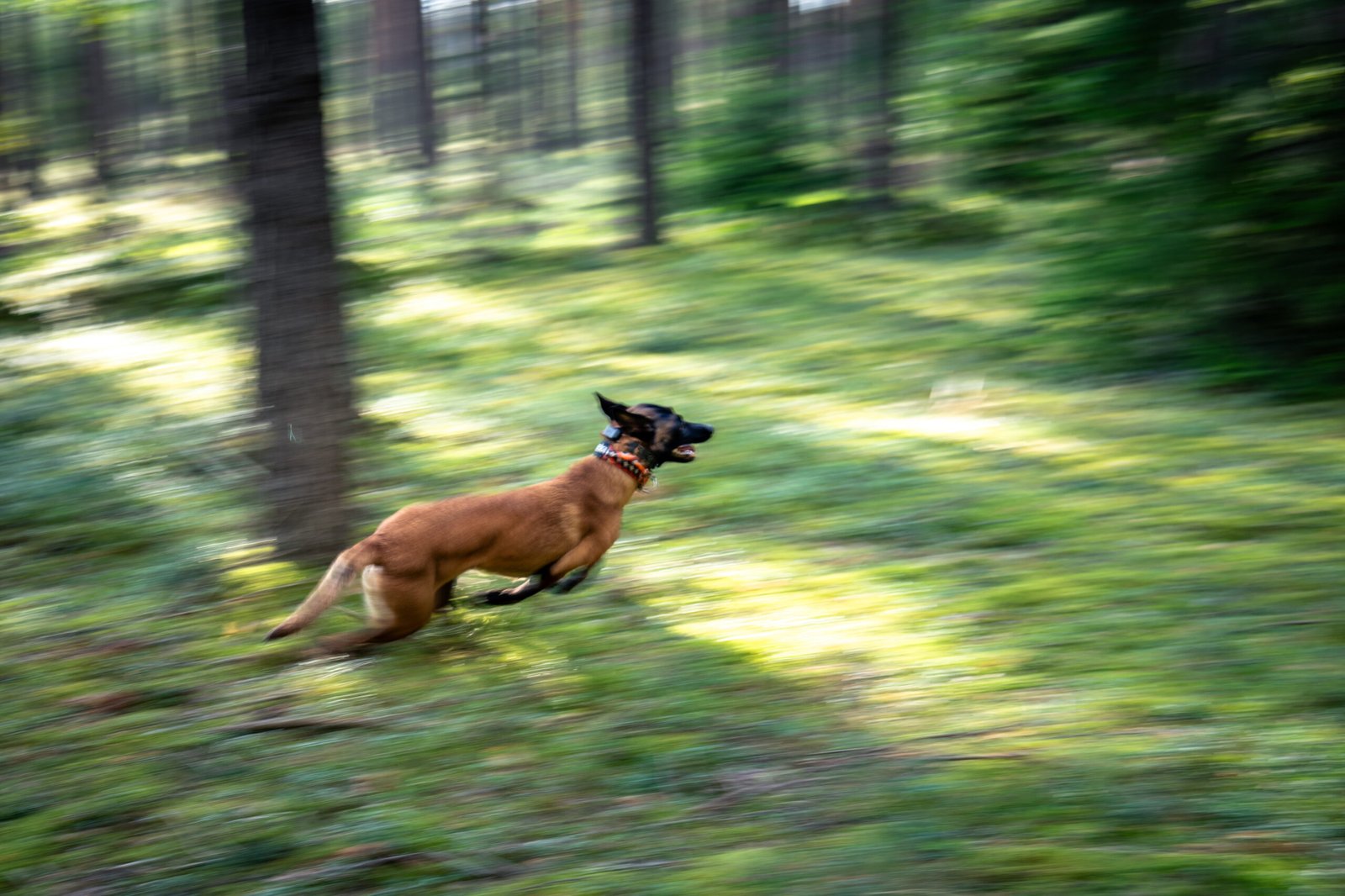
When we think of dog sports that demand athleticism and coordination, agility or canicross often come to mind. But what about mantrailing – that intense, focused discipline where a dog follows a human scent trail across unpredictable terrain, pulling their handler along behind?
It might not look like a traditional sport for the human, but if you’ve ever spent half of an hour behind a determined trailing dog, you know: mantrailing is physically demanding. And while it often feels chaotic or unbalanced, there’s one element that can make a big difference in your experience as a handler:
your running form.
How trail running changed my mantrailing experience
My own mantrailing improved dramatically when I started incorporating running into my routine, especially once I dared to go off-road and onto trail routes. Trail running forced me to build better balance, coordination, and core strength without even realizing it.
More importantly, it gave me stamina. Suddenly, I wasn’t just trying to keep up with my dog – I had spare energy to actually observe her body language, make smarter decisions, and stay more present in the work. I became a more reliable and responsive partner, not just a passenger being dragged through the forest.
That shift inspired me to take a closer look at how important good running form is in mantrailing, not just for performance, but for safety, communication, and focus. And I want to share some of those insights with you here, along with practical tips you can start using right away.
Let’s dive into why good running form matters in mantrailing and how it can improve both your safety and performance.
Preventing injuries in a high-risk activity
Mantrailing isn’t a gentle walk in the park. You’re moving across uneven ground, forest, dodging branches, climbing over rocks, navigating pavement, grass, stairs, all while being partially pulled by a dog who has no time to wait for you to catch your breath.
That unpredictability puts a lot of stress on your body, especially:
- Ankles and knees (due to constant adjustment)
- Lower back and hips (from the pulling force)
- Shoulders and neck (if tension builds through the leash)
Poor form, like slouched posture, heavy heel-striking, or stiff arms – makes you more vulnerable to sprains, strains, and overuse injuries. A good running form, even under pressure, gives your body the best chance to stay aligned, absorb shock effectively, and react to sudden changes.
Staying focused under physical stress
Mantrailing is not just physically demanding – it’s mentally intense. You’re interpreting your dog’s subtle cues, holding trail map in your head and in the same time navigating terrain, avoiding hazards, and staying aware of your environment, all while being pulled, sometimes forcefully, in unpredictable directions.
In high-intensity moments, it’s easy to lose focus, especially if you’re fatigued or overwhelmed. And when your attention drifts, you might:
- Miss signs that your dog is losing the trail
- Fail to notice hazards like traffic or unstable footing
- Misjudge your dog’s body language
- React too slowly to directional changes
Maintaining mental clarity and attention under physical stress is a critical skill and like anything, it can be trained.
Better balance in off-balance situations
Let’s be honest: mantrailing doesn’t allow for perfect mechanics. You’re rarely upright, rarely symmetrical, and you’re constantly following your dog’s unique pathing logic. But that’s exactly why you need a strong baseline of good form.
With better posture, strong core engagement, and an awareness of your gait, you’ll be better able to handle moments when you’re off-balance, like when your dog:
- Suddenly cuts left across a slope
- Takes off at a sprint after picking up a fresh scent
- Leads you across loose terrain or obstacles
Good form helps you recover quickly, stay centered, and avoid falls or missteps, even when you’re being yanked unexpectedly.
More efficient movement means greater endurance
Running with poor form is like driving with the parking brake on – it burns energy fast.
When your running (or fast walking) form is efficient, you:
- Waste less energy with unnecessary movement
- Breathe more effectively
- Maintain a more sustainable pace
This matters during long or repeated training sessions. If you’re fatigued early on, you can’t focus on your dog, their body language, or the trail itself. Good form helps you conserve energy and stay mentally sharp, especially important in higher-stakes operational or competition trailing.
Clearer communication with your dog
Your body is part of your communication toolkit whether you realize it or not. Dogs are sensitive to our:
- Posture
- Speed
- Line tension
- Directional cues
When you’re running with intention and balance, you’re more consistent and readable. If your form is erratic, stiff, or uncoordinated, your dog may misread your cues or feel uncertainty through the leash.
In mantrailing, your dog is doing the scent work, but you’re still a partner. Moving smoothly, confidently, and in sync with your dog helps them trust you to follow safely and efficiently.
How to improve your form, even if you’re not a “runner”
You don’t need to be a marathoner to benefit. Just focus on:
- Core strength: helps stabilize you when pulled.
- Posture: keep your shoulders back and chest open.
- Footwork: practice short, quick steps rather than long strides.
- Balance drills like single-leg stands or agility ladder drills.
- Mobility: loosen hips, ankles, and shoulders.
A few minutes of weekly practice can go a long way toward making you a more effective, resilient handler.
How to train focus during high-intensity activity
One effective method is to combine physical exertion with cognitive load. This helps your brain adapt to thinking clearly even when your body is under stress. A few examples:
- Interval and trail running while listening to educational or scientific material
(Just like I do!) This forces you to focus on the content while your heart rate is elevated – improving your ability to stay mentally sharp during intense activity. - Running while solving light mental tasks
Such as repeating memory sequences, answering quiz questions, or summarizing information aloud while moving. - Practicing “visual sweeps” during exercise
Scan your surroundings and consciously register details while jogging – a skill that translates directly to situational awareness on the trail. - Timed problem-solving after cardio
Do a short burst of high-intensity movement (like jumping jacks or sprint intervals), then immediately answer a logic puzzle or recall a set of instructions.
Over time, these drills condition your brain to filter distractions and prioritize information even when you’re physically taxed, just like you’ll need to do while mantrailing.
Final thoughts
Mantrailing isn’t just a mental challenge for your dog, it’s a physical and tactical challenge for you. You’re part athlete, part partner, part handler. Even though the activity feels chaotic at times, bringing awareness to your own movement can have a huge impact on your safety, endurance, and ability to support your dog.
So the next time you gear up for a trail, remember: your form matters. You may not be in full control of the route, but you are in control of how you move through it.
Leave a Reply