Introduction
Over years in dog training, I found myself puzzled by how trainers mix up “drive” and “motivation.” For example: “obedience sit command before the trail start will lower dog’s drive”. Will it?
Intuitively, both motivation and drive seem related, but experts actually define them as different concepts. In behavioral terms, drive is an innate, biological urge to satisfy a need (for example hunger or a chase instinct), whereas motivation is the reason or willingness to act in a certain way. In other words, drive is “how much” an animal wants a reward, and motivation is why it chooses to work for that reward.
To put it simple: Hull’s drive explains why the dog wants to act. Skinner explains how to channel and strengthen specific actions.
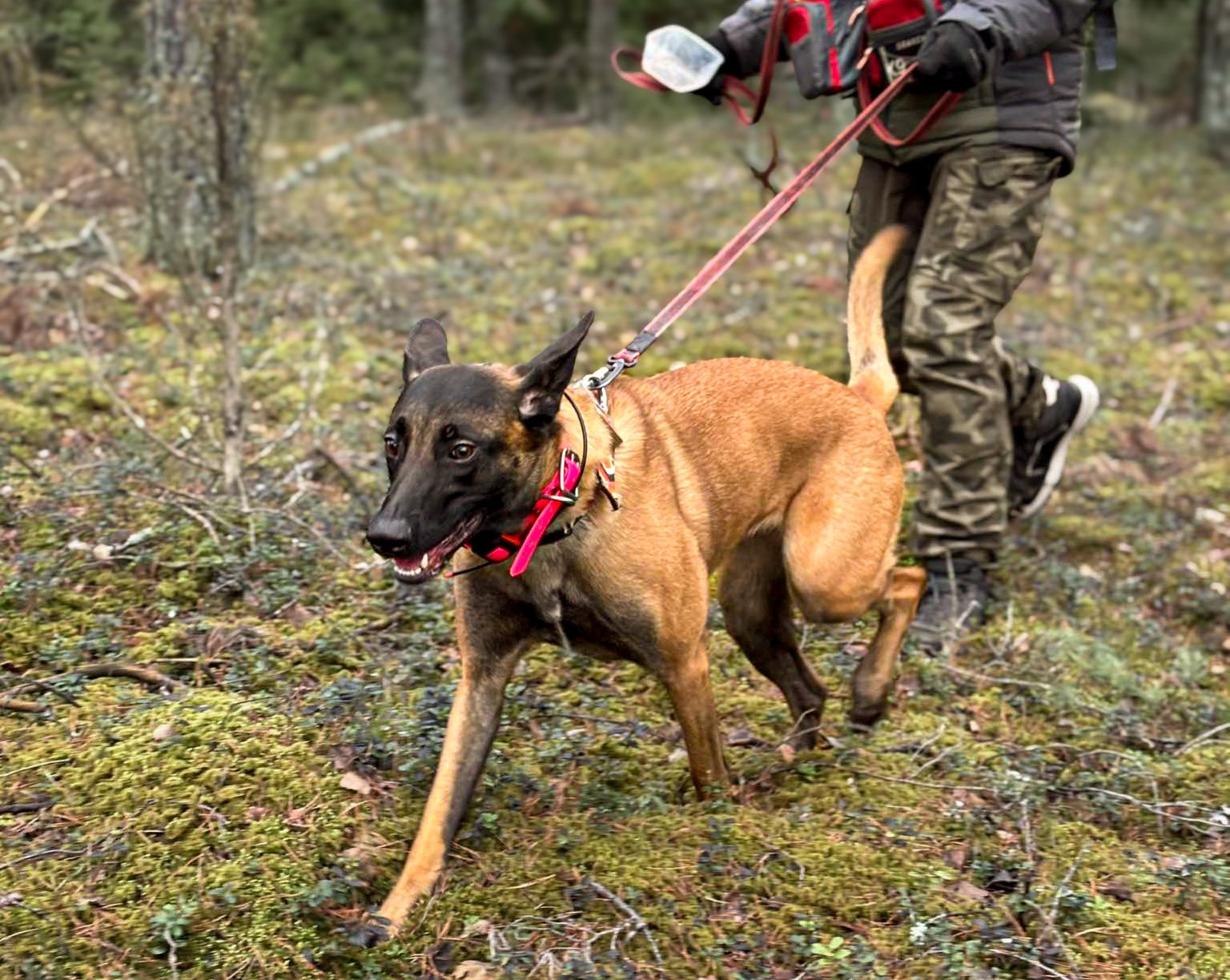
Example: A high-prey-drive Malinois chases squirrels. Hull’s drive concept says: the internal drive for chasing is strong. Skinner’s framework says: let’s shape that drive into controlled behaviors (e.g. tug toy on command) using positive reinforcement and variable rewards.
The result? The drive provides the energy. Operant conditioning provides the learning mechanism.
Understanding these definitions helped me realize that I should focus on building motivation (through clear training and rewards) because a dog’s basic drives are largely fixed. For example, all dogs have a food drive (they must eat to survive); we can’t really increase that innate urge, but we can make food a more enticing reward by being predictable and fair.
- Drive: an innate, biologically determined urge (e.g. hunger or prey drive).
- Motivation: the reason or willingness to perform a behavior; the immediate desire driven by rewards or goals.
- Training focus: We can train and shape a dog’s motivation (by making rewards predictable and valuable), but we cannot change its basic drives, which are fixed at birth.
This clarification of terms was just one motivation for writing. Another came from my interests in psychology and daily work in IT: I’ve long been skeptical of overly mechanistic models of behavior. For example, Freud famously described the mind using a “steam engine” metaphor – imagining “psychic energy” flowing like steam through pipes. This 19th-century view treats people (and, yeah – dogs) as steam-powered machines, which always felt too simplistic to me. After all, the brain is now understood as a complex network of neurons, not rigid pipes of steam.
However, reading “Noise” written by Cass R. Sunstein, Daniel Kahneman, and Olivier Sibony gave me a new perspective. Authors of this book explain that very simple, consistent decision-rules or models often outperform humans on average. They note that decades of studies found even “mindless” rules (like a formula using just a few measurable traits) slightly beat expert judgements on a case-by-case basis. In practical terms, this means that for predicting behavior from large data patterns (much like an AI model does), simpler models can be surprisingly powerful. Even though no model can perfectly predict an unpredictable world, algorithmic predictions tend to be more accurate than individual human forecasts.
These insights brought me back to basics: if simple patterns can capture much of behavior, what do drive and motivation look like under that lens? In this blog post I explore how these foundational ideas fit into my daily dog training.
Drive vs motivation in dog training
Understanding the difference between drive and motivation starts with behaviorism – the 20th-century school (Watson, Skinner) that focused on observable behavior and conditioning. Behaviorists held that animals learn behaviors through stimulus-response conditioning, not by mysterious internal states. As one author notes, a dog with a bowl of food will happily perform tricks, but with no food it “will likely seem completely disinterested,” simply responding to external cues. In this view, the dog isn’t “trying hard” by internal will; it’s just reacting to the environment (food or no food) as the stimulus.
In behaviorist models, terms like drive and motivation were initially framed very differently than in everyday speech. Clark Hull’s drive-reduction theory (1940s–50s) treated a drive as an internal biological need (e.g. hunger, thirst) that creates tension or arousal. The theory held that animals act to reduce this tension and restore homeostasis. In Hull’s words, a dog’s drive is “any internal factor that compels an organism to seek out certain stimuli or perform certain behaviors to reduce arousal”. For instance, if a dog is hungry (drive), it will search for food; eating then reduces the drive, reinforcing that behavior. Hull’s model even used equations to quantify this, with drive strength (based on deprivation) boosting the tendency to respond.
In contrast, motivation is a broader term describing why an animal acts – the reasons or incentives behind behavior. An agility trainer defines motivation as “the reason or reasons one has for acting or behaving or the general desire to do something”. Motivation encompasses both internal urges and external incentives. For example, a dog may be motivated to track a scent because the trainer has paired tracking with toys or praise – the reward itself gives the dog a reason (motivation) to follow the trail. Early incentive theories argued that organisms do not act solely to reduce drives but to obtain external rewards. In fact, even when no physiological need is being satisfied, a dog might perform tasks eagerly if it expects a high-value reward. Thus, whereas Hull’s drive-reduction theory emphasizes tension and homeostasis, modern perspectives also stress the pull of positive incentives on motivation.
Clark Hull’s drive reduction theory
Hull’s theory: In Hull’s drive-reduction view, motivation stems from biological needs that create discomfort (drives). When an animal is in a state of deprivation (e.g. hungry or thirsty), a drive arises; any action that reduces this drive (eating or drinking) is reinforcing. Hull explicitly tied learning to drive reduction: after a response reduces a drive, the stimulus that led to that response gains strength. During the 1940s-50s, he argued that this mechanism could explain why behaviors are learned in many animals and humans. For example, a dog learning to find food in a maze does so because each correct choice brings it closer to satisfying hunger, thereby reinforcing the path. Over time the dog learns the maze largely through these drive-reduction episodes.
Limitations: Drive reduction theory was influential but flawed. Critics pointed out several issues: for one, it couldn’t explain why animals sometimes pursue behaviors that increase arousal or do not reduce a physiological need. People (and dogs) will eat when not hungry or seek thrills (sky-diving, chasing moving toys) that heighten tension instead of reducing it. Hull’s theory also ignored secondary reinforcers – stimuli that become rewarding through association (like money, praise, or tokens) but don’t directly reduce a physiological need. For instance, a human will work for money in an office only because money buys food, not because money itself reduces hunger. Hull’s model couldn’t account for how such neutral items motivate behavior. In practical terms, this means drive-reduction fails to explain why a fully-fed dog (no hunger drive) still eagerly fetches a treat or ball: the reward itself, not hunger, is the real motivator. To summarize, Hull’s drive reduction concept has been largely replaced by modern theories that include cognitive, emotional, and social factors.
Criticisms of Drive Theory: Researchers have noted that (1) Hull’s strict equations and assumptions lacked generalizability, (2) the theory ignores secondary reinforcers like money or toys, and (3) it cannot explain behaviors that don’t serve homeostasis – e.g. eating when already full or pursuing excitement. These gaps are important because in dog training, many behaviors (play, exploration, tricks) are not driven by hunger or thirst, but by learned rewards or innate joys. Alternative models, such as incentive motivation, explicitly include these reward-driven behaviors.
Skinner and operant conditioning
B.F. Skinner approached motivation differently. In Behavior of Organisms (1938) he largely avoided terms like “drive,” instead explaining behavior through reinforcement and environmental variables. Skinner argued that what look like drives (e.g. hunger) are actually environmental states of deprivation or satiation that modulate how an animal responds. In effect, motivation arises from antecedent conditions: a deprived dog will work for food, a sated dog will not. Reinforcers (food, toys, praise) increase the likelihood of a behavior. For example, Skinner would say a dog’s behavior of sitting on cue is maintained by the external consequence (a treat) rather than any internal “drive” to please.
Skinner’s view: Skinner saw behavior as governed by its consequences and context, not by unobservable drives. As one discussion notes, “the causes of behaviors related to ‘drive’ were environmental events, namely deprivation, satiation, and aversive stimulation, not internal states such as thirst or anger”. In simpler terms, if a dog presses a lever to get food, Skinner would say the food (and the dog’s deprivation) explain the behavior – not a mysterious internal hunger drive.
Criticisms: Like Hull, Skinner’s model has limits. By focusing strictly on external reinforcement, Skinner downplayed internal factors (thoughts, emotions, instincts) that we know influence behavior. Critics argue this ignores important aspects of animal motivation – for instance, genetic predispositions (breeds bred for chasing or tracking) and the dog’s own perceptions are left out of the model. Skinner even discouraged talk of cognitive explanations, which can be a weakness when training animals that clearly show curiosity or problem-solving that goes beyond simple S-R chains. Nonetheless, Skinner’s work underpins modern dog training, emphasizing that timing and consistency of reinforcement shape performance (e.g. delivering treats precisely when the dog follows a scent).
Drive vs motivation: key differences
In practical terms, drive and motivation are related but not identical concepts. A helpful summary from agility dog training puts it this way: drive is “an innate, biologically determined urge to attain a goal or satisfy a need,” while motivation is “the reason or reasons one has for acting” or the general willingness to do something. In other words, drive is what the dog wants (its natural yearning), whereas motivation is why the dog acts (often tied to rewards or incentives).
Internal vs. External: Drives are internal forces – instincts or physiological needs. For example, hunger is an internal need, so in behaviorist terms it was once thought of as a drive. Motivation, however, includes both internal needs and external incentives. A treat or game can motivate a dog even if it isn’t hungry. One trainer put it simply: “Motivation is the reason one has for behaving. Drive is how much they want the motivator”. This highlights that motivation usually involves the perceived value of a reward (the motivator), whereas drive is the raw urge.
Homeostasis vs. Incentives: Hull’s classic model saw actions as reducing drives and returning to equilibrium. By contrast, modern views note that animals (including dogs) sometimes act to increase arousal or gain rewards, not just reduce needs. Incentive theory, for example, posits that external rewards themselves pull behavior – you work for a bonus even if you don’t “need” the money. In dog training, this corresponds to teaching a dog that following a trail or performing a task leads to a treat or play session (the incentive), not just relief of hunger.
Innate vs. Learned: Drives are partly innate and fixed (a dog may naturally have more prey drive or pack drive), while motivation is malleable. Importantly, motivation can be increased through learning: even a dog with low innate drive can become enthusiastic if the reward schedule is clear and predictable. One agility trainer notes that predictability of reinforcement is extremely motivating – a dog with “low food drive” will work hard if it can reliably predict where its next treat is coming. In short, training and rewards shape motivation, regardless of the dog’s starting drive.
For dog trainers, confusing these terms can lead to misunderstandings. Phrases like “food drive” or “toy drive” are common, but they mix concepts. For instance, an experienced trainer writes that all dogs have a desire to eat (food drive), and if one has “high food drive” it seems easy to motivate with food. Similarly, a dog with high “toy drive” has a strong chase instinct, making play a great motivator. These usages assume drive and motivation are interchangeable – but technically, a dog’s drive (e.g. appetite or chase instinct) is innate, whereas its motivation (e.g. eagerness to fetch that treat or toy) depends on how those rewards are presented.
One critique comes from Sam (Sam The Dog Trainer, 2025): he argues hunger is actually a motivation rather than a drive, and true drives are innate survival behaviors (sex, prey, defensive, pack). In his words, saying “food drive” confuses the issue. He cautions that calling a treat a “drive” misleads trainers into thinking the dog is biologically compelled rather than simply learning the value of that reward.
Practical example: scent work and tracking
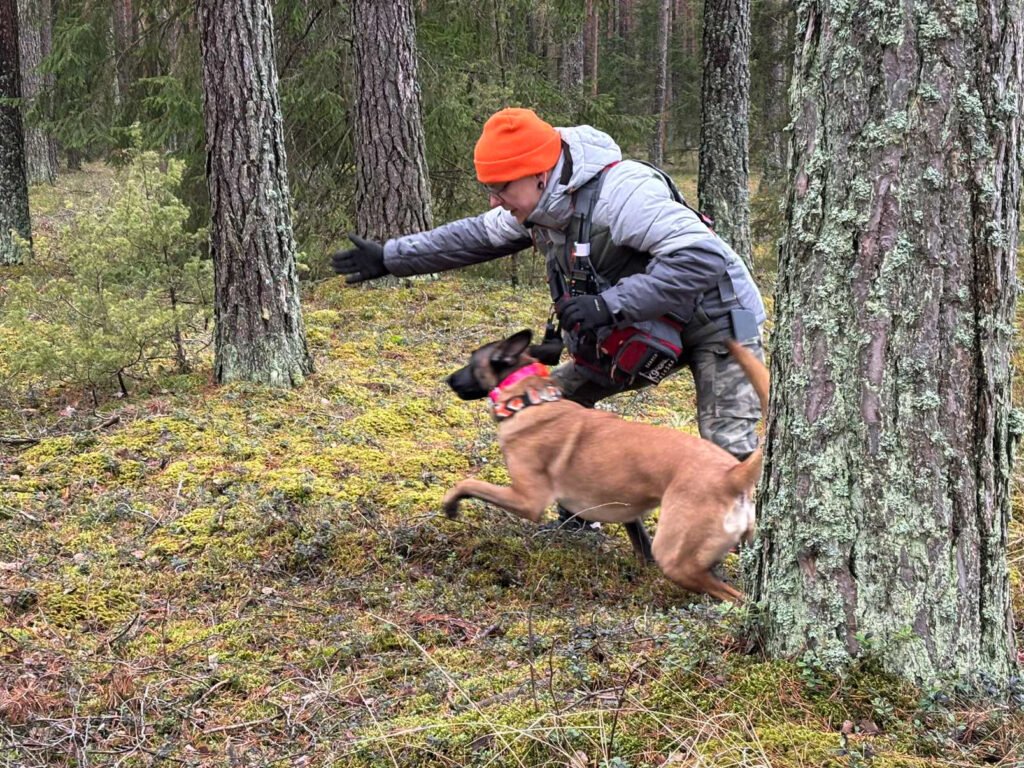
In scent work, the dog’s focus on the track reflects both instinct and motivation – it’s trained to associate following scent with rewards.
Consider a tracking dog. Its keen interest in following scents is often described as high drive. For example, a K9 training article notes that dogs showing “intense interest in following scents” display the high drive and motivation needed for tracking. In practice, the dog learns that following the scent leads to a reward (toys, food, praise) at the trail’s end. The scent itself and the promise of a reward create strong motivation to track. Trainers observe that high motivation makes dogs persistent in difficult conditions (“continue searching despite obstacles”) and able to concentrate on a single scent over time.
So in scent work, a dog’s “drive” might refer to its natural tenacity or enjoyment of the task, but the actual behavior is maintained by motivation built through training. Even a dog not born with an exceptionally strong scent drive can excel if it has learned that tracking reliably leads to positive outcomes. For instance, using consistent reinforcement (e.g. treats hidden along the trail in tracking or Intensity Trail in the Kocher method – trailing) heightens the dog’s motivation: the dog learns the trail pays off. This aligns with what we see in behavior theory – the reinforcement history makes the act of trailing rewarding, independent of a baseline “drive” level. In short, good training channels a dog’s existing drives (prey/curiosity) and amplifies them through motivated learning.
Conclusion
The behaviorist era gave us formal models of drive and motivation, but both Clark Hull’s and Skinner’s theories have blind spots. Hull’s drive-reduction idea highlights how physiological needs can push behavior, yet it fails to explain play, exploration, or any action that isn’t about reducing need. Skinner emphasized the environment and reinforcement, rightly showing how rewards shape behavior, but overlooked that dogs also have innate tendencies and mental states. Modern psychology recognizes that motivation is multifaceted: sometimes we act to relieve drives, sometimes to seek excitement or rewards (incentives).
For dog trainers, the takeaway is practical: treat “drive” and “motivation” distinctly. Drive can be thought of as a dog’s built-in urges (prey drive, pack drive, etc.), while motivation is the dog’s willingness to work for a reward. By focusing on motivation – e.g. by making rewards clear, predictable, and valuable – we can get the best performance from any dog, regardless of its baseline drive. In scent work or any discipline, clarifying these terms helps set realistic expectations and more effective training strategies.
Sources
Overview of drive-reduction theory: motivated behavior aims to reduce physiological drives (e.g. eating to relieve hunger reinforces the behavior). SimplyPsychology (Drive-Reduction Theory of Motivation) https://www.simplypsychology.org/drive-reduction-theory.html
Critiques of Hull’s theory: Hull’s drive-reduction formula failed to explain complex behaviors, and by the 1970s drive-reduction theory was largely abandoned. Learning-Theories.org (Drive Reduction Theory) https://www.learning-theories.org/doku.php?id=learning_theories:drive_reduction_theory
Operant conditioning (AKC advice): dogs learn via consequences – behaviors with pleasant outcomes increase in frequency, unpleasant outcomes decrease it. AKC (Operant Conditioning & Positive Reinforcement) https://www.akc.org/expert-advice/training/operant-conditioning-positive-reinforcement-dog-training/
Operant terminology (UWSP Dr. P’s): “positive” = adding a stimulus, “negative” = removing; reinforcement increases a behavior and punishment decreases it. Dr. P’s Dog Training (UW-Stevens Point) https://www4.uwsp.edu/psych/dog/la/DrP2.htm
Operant conditioning in dog training (WSHS): Positive reinforcement = adding a reward after a correct behavior (e.g. giving a treat for sit); also explains the roles of punishment. WSHS-DG Ask-the-Trainer (Science & Art of Dog Training) https://www.wshs-dg.org/resource-center/ask-the-trainer/131-ask-the-trainer/414-science-and-art-of-dog-training
Operant in dog training (ProjectUpland): outlines modern shift to reward-based training from Skinner’s operant model; describes positive vs. negative reinforcement to shape behavior. ProjectUpland.com (Dog Training article) https://projectupland.com/dogs/the-theory-of-positive-reinforcement-in-dog-training/
Skinner & Behaviorism (GuardDogBlog): covers Skinner’s background (Skinner Box experiments) and operant quadrants; cites Psychology Today on behaviorism’s focus on observable laws; also references Breland & Breland (1961) on limits of pure operant conditioning (instinctual ‘misbehavior’). GuardDogBlog.wordpress.com (Livestock Guardian Dogs) https://guarddogblog.wordpress.com/2018/01/25/to-correct-or-not-to-correct-that-is-the-question/
Hull’s drive-reduction theory (WSU textbook): satisfying a need (eating to relieve hunger) is reinforcing; also notes that some behaviors (like play) occur without any drive to reduce. WSU Principles of Learning & Behavior (Opentext) https://opentext.wsu.edu/principles-of-learning-and-behavior/chapter/module-6-operant-conditioning/
Misbehavior of Organisms (Breland & Breland 1961): classic research showing conditioned animals revert to instinct-driven behaviors, causing “breakdowns of conditioned operant behavior”. Classics in the History of Psychology (Am. Psychologist) http://psychclassics.yorku.ca/Breland/misbehavior.htm
Scentwork and drive myth (CloudNineK9s): blog emphasizes scentwork is accessible to all dogs, not just “high drive” breeds; often lower-drive dogs work methodically and can find scent quicker. CloudNineK9s blog – “Only high drive dogs can do Scentwork… not true!” https://www.cloudninek9s.co.uk/post/only-high-drive-dogs-can-do-scentwork-erm-not-true
Drive-building or loss (StaleCheerios): dog training blog notes drive and motivation are shaped by training methods; poor practices (uncertainty, weak reinforcement, punishment) can erode a dog’s motivation. Stale Cheerios blog (Kay Laurence Lecture Notes) https://stalecheerios.com/dog-training/drive-motivation-build-lose/
Mantrailing & reward (AKC Expert Advice): describes mantrailing sport; emphasizes keeping training fun and rewarding so dogs stay motivated; notes dogs that love trailing tap into their innate drive to use their nose. AKC – “Mantrailing for the Scent-Driven Dog” https://www.akc.org/expert-advice/sports/mantrailing-for-the-scent-driven-dog/
Drive training (MyPuppyMySelf): Lee C. Kelley’s blog – promotes “drive training” using prey toys to build up a dog’s internal tension (drive), then releasing it as reward; contrasts with operant (food) methods and stresses tension-release as learning mechanism. MyPuppyMySelf (Psychology Today blog by Lee Charles Kelley) http://mypuppymyself.blogspot.com/2014/07/unified-dog-theory-14-drive-training.html

Leave a Reply